
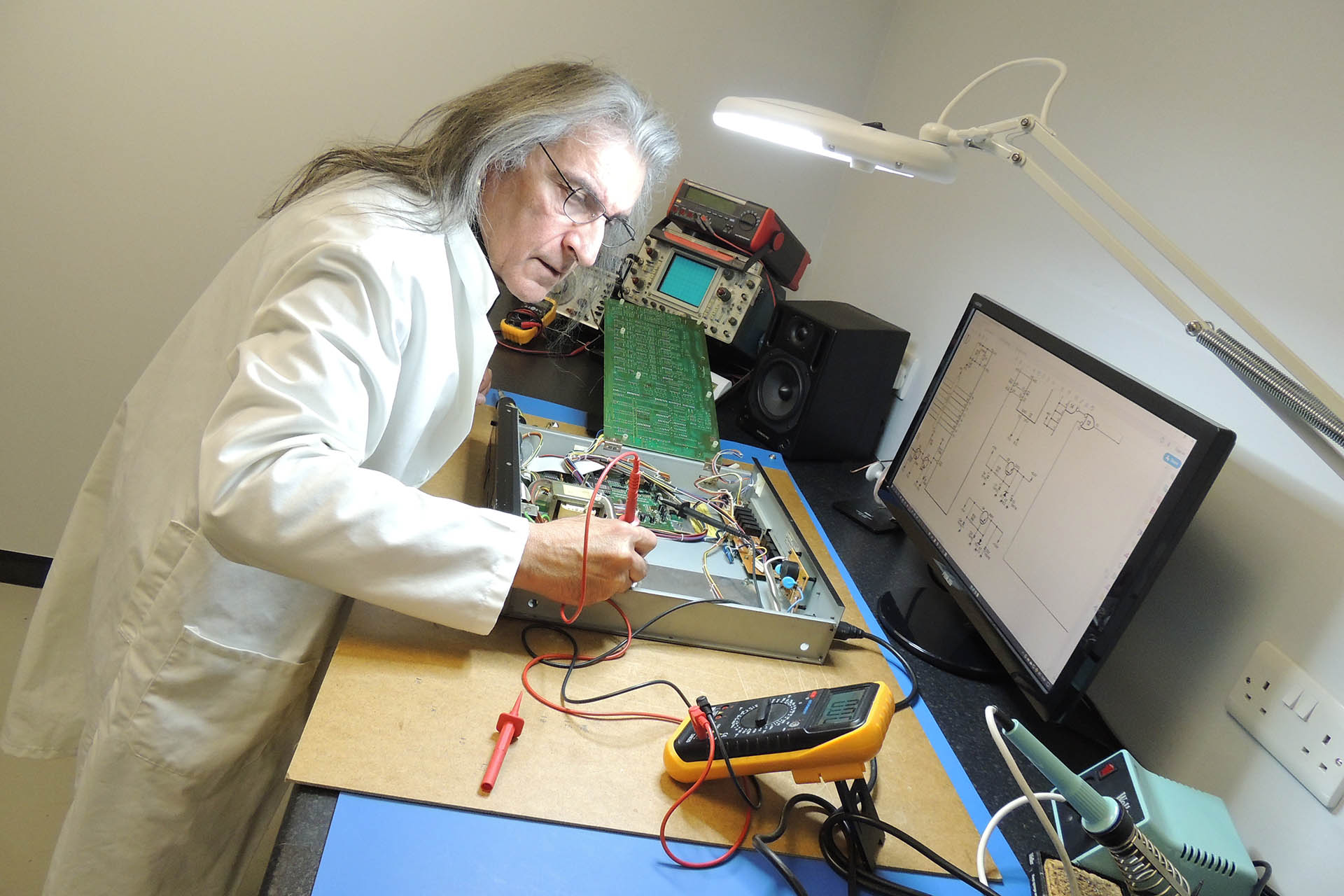
Recently, this gorgeous vintage Roland MKS-70 synth module came in for repair.
The MKS-70 is basically the rack version of the Roland JX-10 keyboard synthesiser, which itself is essentially two JX-8Ps. Also known as the Super-JX, the JX-10 and the MKS-70 are famous even today for their rich, analogue tone and pristine sound quality. At this point I need to make something clear; the Super-JX is not actually 100% analogue unlike for example, one of it's well known predecessors, the MKS-80. The oscillators are in-fact, digital. So when I refer to 'analogue' tone, I'm referring to just that, the tone.
Check out more details and some sounds here and here.
Anyway, the customer said that it wasn't powering up properly with just a flash briefly appearing on the display and then nothing. Well, let's see if we can get this ol' girl singing again..
Apart from being a giant classic, the MKS-70 like the MKS-80, has hinged circuit boards which means that it opens up quite nicely. Having said that, if you need to get at the 'CPU' board (the service notes refer to this as the assigner-board, for some reason), you really do need to disconnect and remove the lower analogue voice-board.
Checking voltages before anything else, I realised very quickly that I had a major problem. The voltages on the power supply were all about 25% more than what they should be. Eek! Hope no serious damage has been done.
I'll keep you posted on this fix but please bear in mind that I'm respecting the COVID-19 lock-down so it may be a while before I'm back.
UPDATE - 2nd April 2020
The power supply is a really clever and well thought out design for the time but I don't think the Roland R & D team had any idea that their machines would still be making music over thirty years after their conception. There's a small voltage monitor / management chip on the power supply which, when it fails, sends the +/-15 V rails to like +/-22 V. Unfortunately the +5 V rail for the digital stuff has a dependency on the +15 V rail so if that freaks out, then so does the +5 V supply. That's seriously bad news for the MKS-70's assigner-board. ?
I decided to change all the major components on the PSU including transistors, capacitors, bridge rectifiers and of course that frigin' voltage controller IC. Okay, so now power is good.
UPDATE - 14th April 2020
Well the voice-boards turned out to be fine but the CPU or assigner-board, was seriously not happy. The code was trying to run but not getting anywhere. My worst fears an' all that... This was not going to be a straight-forward Roland MKS-70 repair!
I'll get back as soon as I get somewhere... or not.
UPDATE - 14th January 2021
The assigner-board on this Roland MKS-70 is indeed kaput. Having got to know Guy Wilkinson of SuperSynthProjects over lock-down 2020, Guy came over when things calmed down and we both agreed that although laborious, one coarse of action would be to swap out all of the ICs but... as many will know, there's one IC that can't be replaced too easily and that's IC2, the 63H149 proprietary Roland gate array.
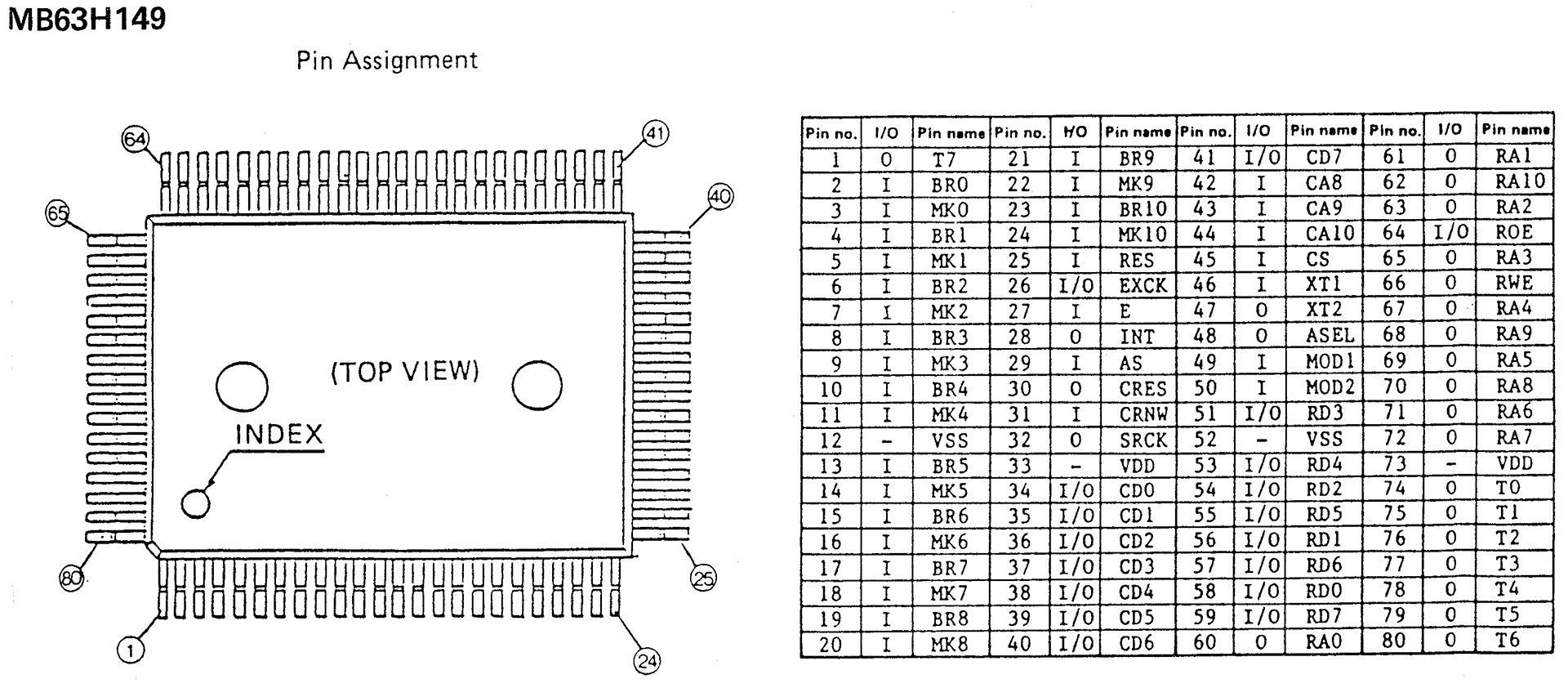
The 63H149 is used in a lot of Roland keyboards and modules, right up to the S-10 and the D-50. In many machines, including the keyboard version of the MKS-70, the JX-10 the 63H149 is mainly used as the keyboard scanner but unfortunately, it's also quite connected to other devices in the MKS-70.
Guy came up with an idea and is currently in the process of designing a 'replacement' for the 63H149. This isn't going to be a drop-in 80-pin device like the 62H149 itself but something that will kind of 'bypass' the chip's functions and fool the MKS-70 into thinking that the gate array is there and functioning normally. If we can do this, it'll be quite a break-through and will potentially save a lot of MKS-70s.
An exciting but time-consuming project, it's going to take a while but be sure that I'll definitely keep you posted.
Please don't hesitate to contact me if you have a sick Roland MKS-70 or any other vintage synth.
UPDATE - 12th June 2021
It's been several months since my last update on this. Guy and I have been working on a project to bypass the Roland 63H149 chip which seems to be the problem in this particular MKS-70. The project is quite consuming and of course, my customer was anxious. Luckily, I found a brand new 63H149 for sale and snapped it up.
Replacing devices like the 63H149 is a daunting prospect but it had to be done suffice to say that once the new chip was installed, the MKS-70 booted! ?
UPDATE - 28th October 2025
It's been more than five years since I posted this article. Since then, I've received so many MKS-70s from all over the world and designed a whole load of peripherals for one of our favourite analogue synthesisers.

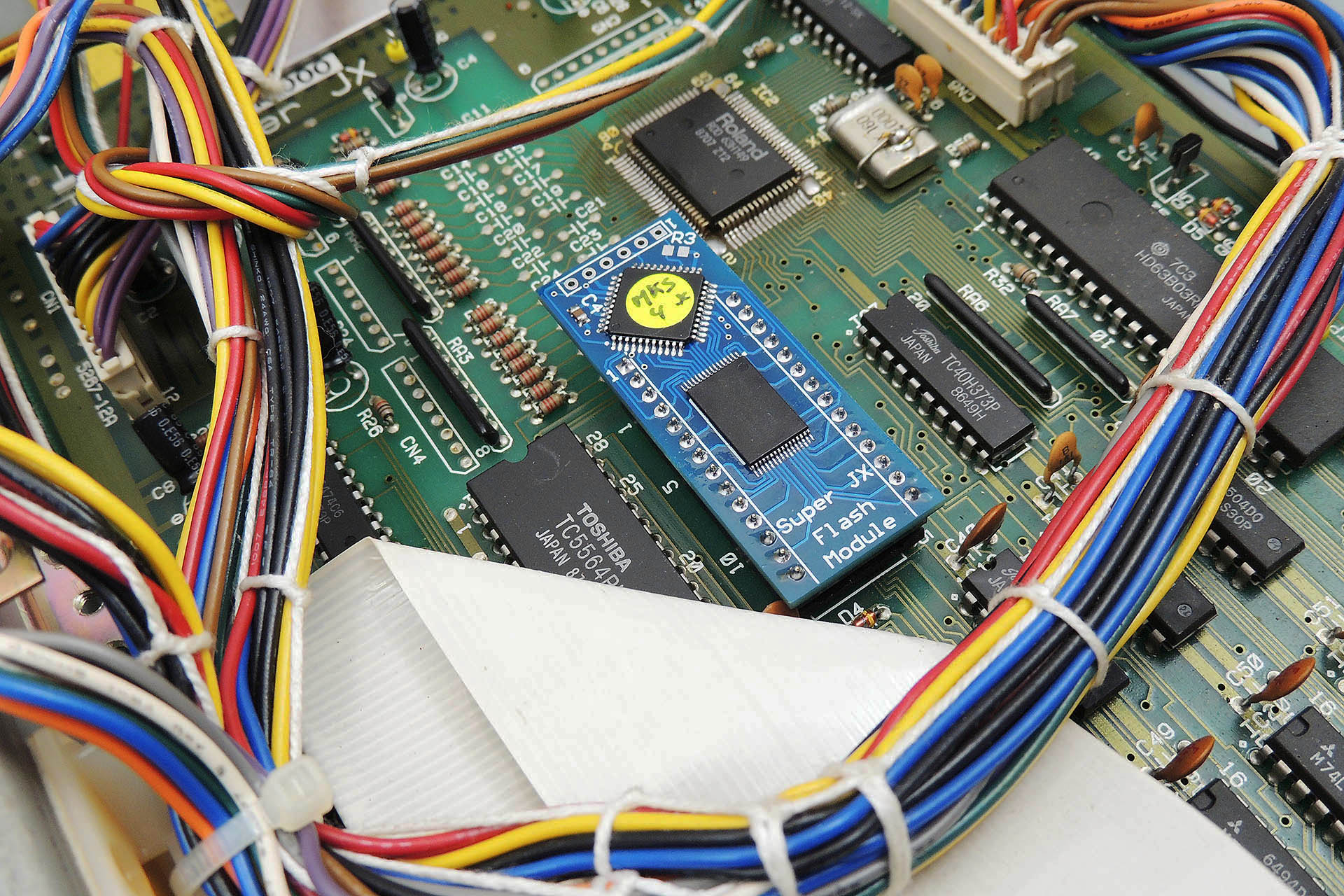
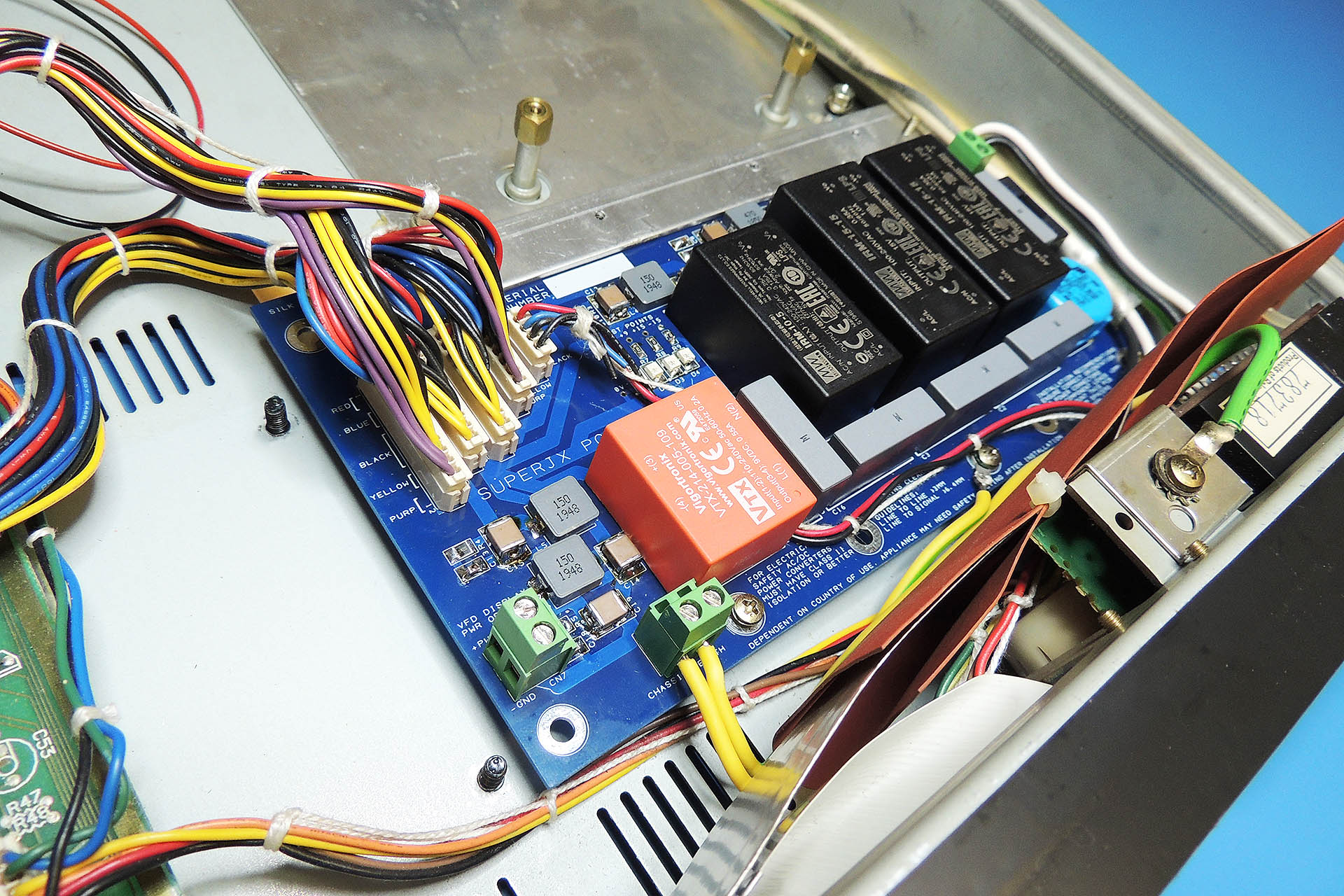
To try to avoid having to go through the above, I now tell all my Super-JX customers to strongly consider replacing the power supply in their instruments with Guy Wilkinson's P0004 modular switched-mode power supply.
Of course, Fred Vecoven's PWM upgrade has now evolved into a much easier (and hence cheaper to install) digital version and Guy Wilkinson's OLED and GU-280 displays are complete life-savers.
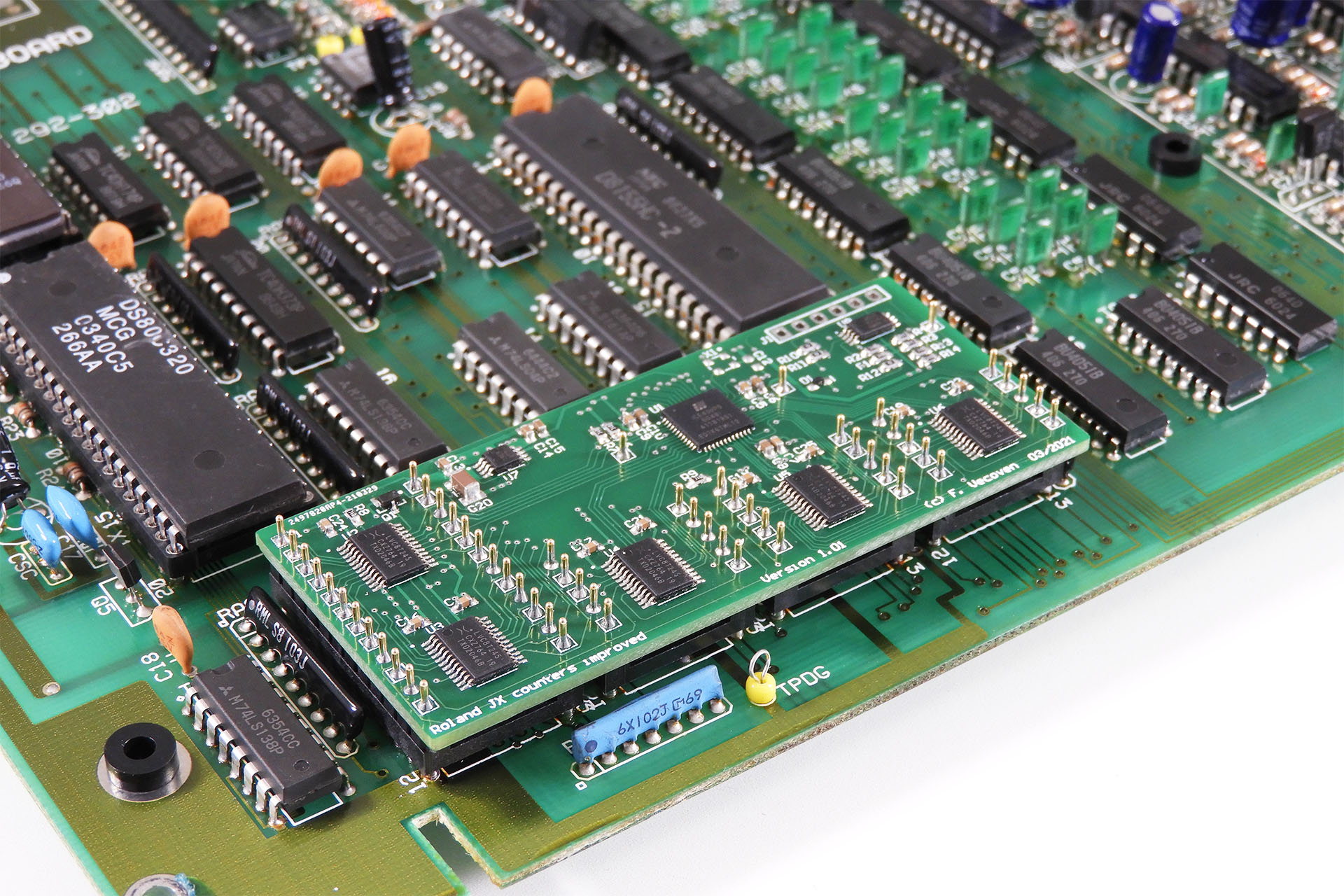
Fred's Super-JX Flash Upgrade not only replaces the firmware of the Super-JX with something a lot more reliable and versatile but it also gives these instruments a massive onboard memory, basically negating the need for storing data on a memory cartridge.
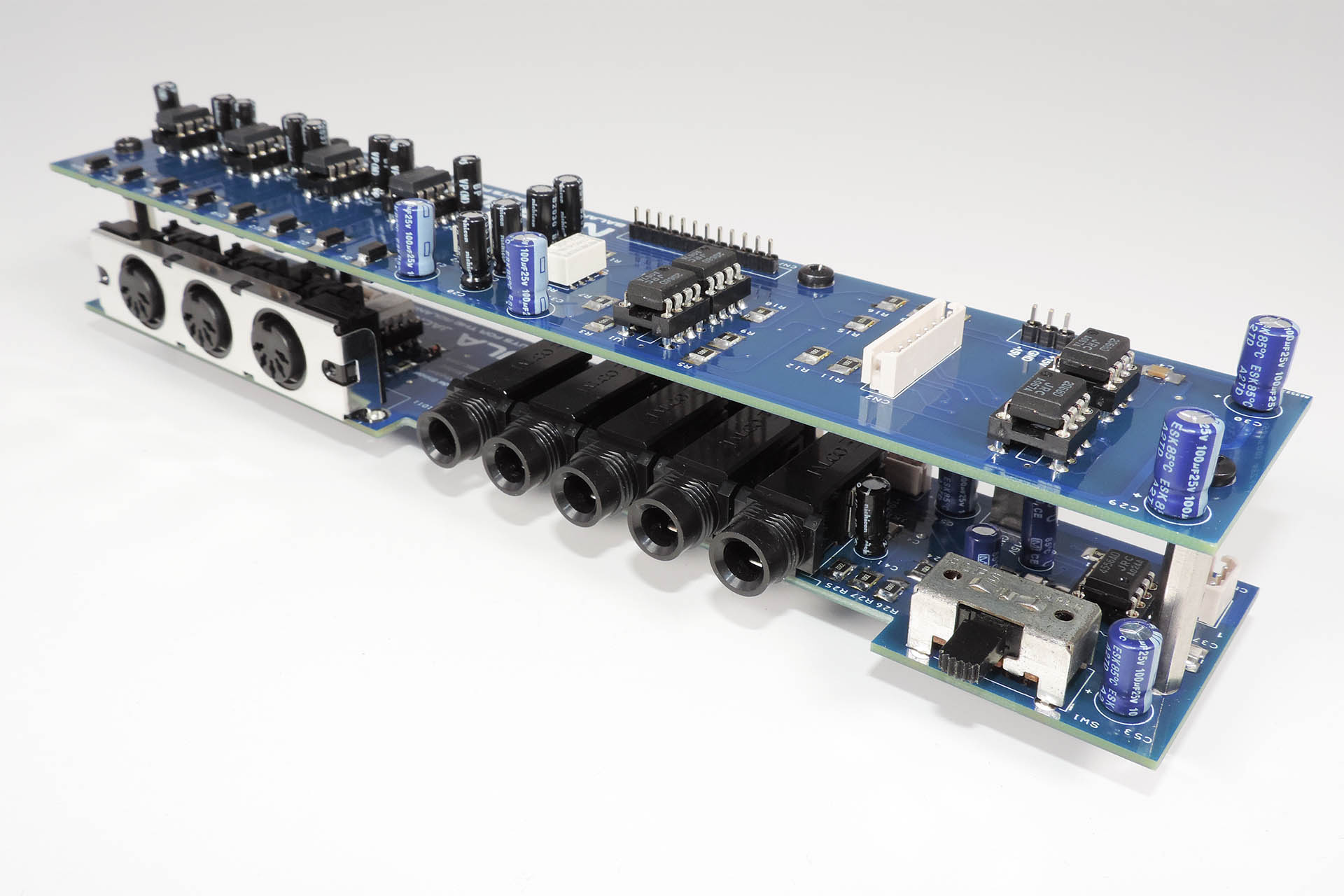
And then there's Nebula. Giving the Roland MKS-70 four high-quality balanced outputs, Nebula also updates the MIDI hardware.
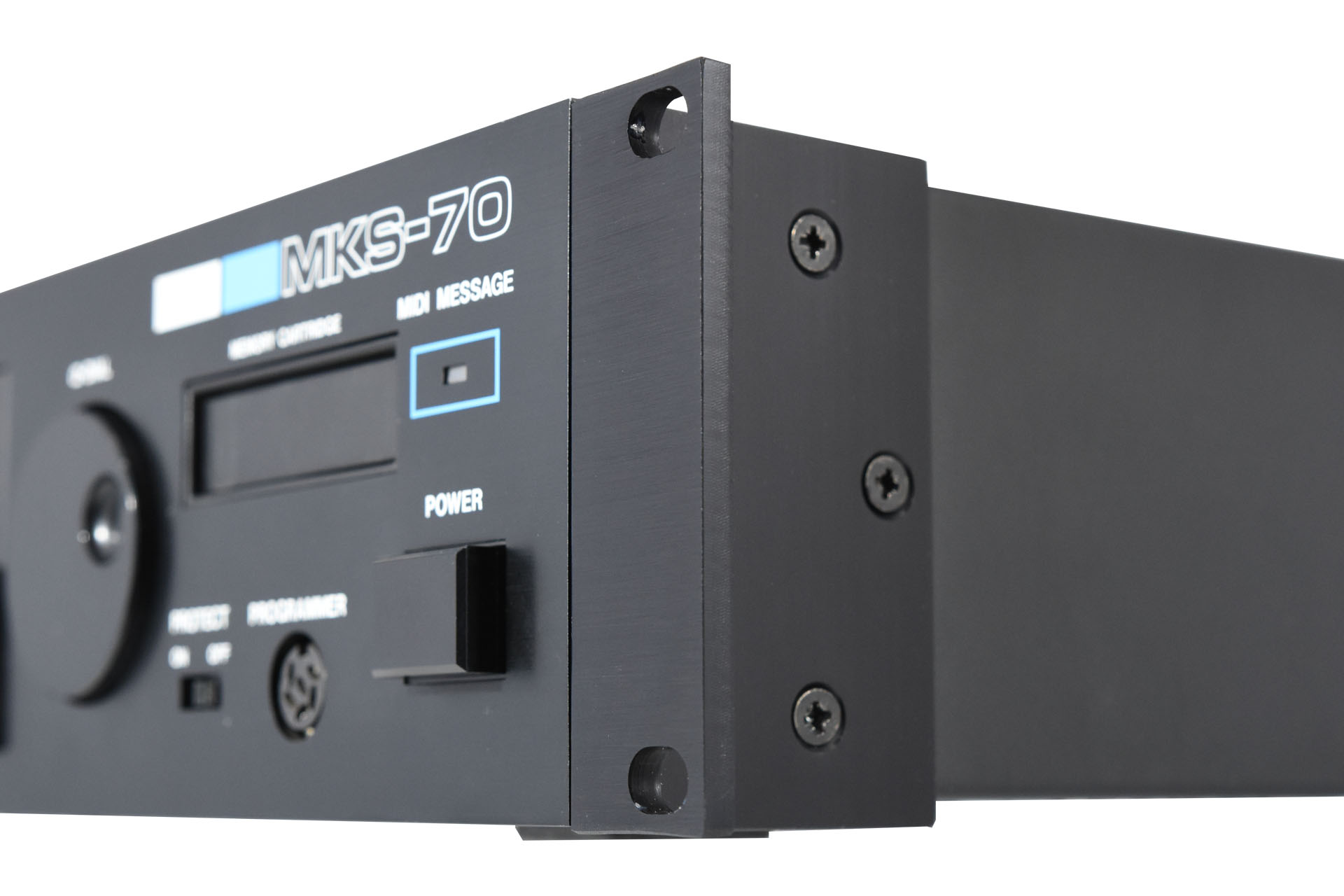
After receiving many requests from around the world, I even ended up designing rack-ears for this beast!
Currently, I'm working hard on getting my Nebula-X project finished. A version of Nebula, Nebula-X is specifically for the JX-10. With different requirements to Nebula for the MKS-70, Nebula-X has been in the pipeline for a couple of years as I've been forced to take my time over it. Unlike the MKS-70 for example, the JX-10 is a performance instrument and as such, has a whole bunch of pedal inputs, all of which are of course, on the jack-board. Indeed, sourcing some parts to match up with the originals has been a challenge on its own.
Due to the physical layout of the JX-10, noise from the display is picked up by the lines connecting the voice-boards to the jack-board. Nebula-X implements a technology to try to mitigate that noise. As well as having balanced outputs, Nebula-X also has balanced inputs. By replacing the cables in between the voice-boards and Nebula-X with a rewired version of the cable, the Nebula-X system reduces the noise induced from the rest of the JX-10.
Anyway, my Nebula-X project is going well and I hoping to make Nebula-X available early next year.