My NC-7 noise cancelling mod for the Simmons SDS7 is for those SDS7s that didn't get this mod factory fitted.
"Surely that can't be" I hear you ask.
Pictured below, is part of the Simmons SDS7 showing the quad op-amp, part of which is used to buffer the stereo outputs. Due to the mish-mosh of analogue, digital and power tracks on the back plane, Simmons was forced to come up with an easy retrofit solution to reduce specifically, CPU noise picked up by the stereo buss. Able to take advantage of a spare op-amp stage in the TL084 and dropping an 'aerial' on the rear of the back plane, inverted noise was mixed on to the stereo buss, thereby cancelling out the 'in-phase' noise. Highlighted in red is the pre-set pot and the two 10kΩ resistors which were part of that mod.
There are however, a few SDS7s out there that didn't get the mod! Pictured below, is my test SDS7 which I used to develop Pleiades, Dark Matter and AMEP and as you can see, it didn't get the mod fitted back in the day.
You'll also notice the absence of a small green capacitor, highlighted in yellow on the second image. This 47pF capacitor which is connected between pins 10 and 12 of the TL084, is sometimes soldered on the back of the back plane PCB. More about this later.
Well, I was going to implement the mod as per the original service bulletin but as it turned out, the track layout of the back plane version in my test SDS7 was different to later revisions and I wasn't able to drill the three holes for the pre-set without busting a track.
Then I had a thought; "Why don't I knock up a little snap-in PCB to do the job?" That way, anyone with a SDS7 that didn't have the noise cancelling mod installed, could also benefit. 🙂
Snaping into the IC socket that the TL084 is in and taping the aerial on to the rear of the back plane, means that NC-7 can easily be installed in a few minutes.
Of course it's not quite that straight-forward. The noise cancelling circuit has to be 'tuned', hence the pre-set pot. Instructions on how to do that are in the installation manual and that process also takes only a few minutes.
The two through-hole resistors of the original mod, are replaced by SMD 0805 resistors that are situated underneath the IC on NC-7. That 47pF capacitor I mentioned earlier, is also superfluous as on the underside of the NC-7 PCB is a SMD 2010 47pF capacitor. Hence, if the original capacitor is indeed soldered to the rear of the TL084, it must be removed.
Irrespective of where the 47pF is located, it should be removed as NC-7 has a 47pF on-board.
NC-7's aerial wire can't simply flip over the back plane PCB. That's because one of three guides guide in the SDS7 top-case secures the back plane PCB exactly where the aerial wire needs to be. The wire I chose for the NC-7 aerial wire is CAT5/6 cable strand so it's solid. If it catches into the guide of the top-case, it'll break. Hence, the aerial wire has to go to one side.
In a similar manner as the original mod, the aerial from NC-7 is hot-glued to the rear of the back plane in between the edge connectors for modules 9 and 10 and across the stereo outputs busses.
So while looking into the infamous SDS7 noise and testing my NC-7 noise cancelling mod for the Simmons SDS7, I thought it might be an idea to actually record this annoying phenomenon.
The video below shows the effect on overall noise level, as the NC-7 noise cancelling mod is gradually tuned in. Check out the VU meter on the right.
WARNING!!!! The signals have been amplified so TURN DOWN YOUR SPEAKERS
Below is a spectral capture of the noise and the effect of the NC-7 noise canceller. As can be seen, tuning in the NC-7 noise cancelling mod, reduces noise between 3kHz and about 11kHz but doesn't do anything for lower frequency noise.
There's one other thing... In fact, you may already have noticed, that instead of using a TL084, NC-7 is fitted with a newer NJM2060. This device is of a much higher specification than the humble TL084. Since two stages of this quad op-amp are used to buffer the stereo buss, having a quieter device will no doubt improve the signal-to-noise ratio on the stereo outputs. 😊
NC-7 is handmade in Hemel Hempstead, Hertfordshire, United Kingdom, only a few miles from St. Albans where Simmons used to based and where I used to work.
I do not keep NC-7 units in stock and each NC-7 is built to order.
Pictured is NOT a hacked original SDSV blanking plate but a newly developed aluminium plate which is the basis of SDSM. Hey, just in case you're wondering.
SDSM - MIDI for the Simmons SDSV does what it says on the packet. With the addition of a Tubbutec uniPulse MIDI to trigger converter, SDSM makes it really easy to add MIDI triggering to the Simmons SDSV WITHOUT drilling holes or making any other permanent modifications to your vintage synthesiser drum system.
When looking to buy my first Simmons SDSV several months ago, I immediately considered adding some type of MIDI triggering. The problem was that MIDI to trigger interfaces are quite thin on the ground, probably because it's such a limited market. Something like the Simmons MTM was a bit over the top for my needs so imagine my delight when I stumbled across uniPulse by Tubbutec.
Yes, of course I considered designing my own MIDI to trigger converter but after buying a uniPulse to basically try out, I knew I'd found what I was looking for so why would I reinvent the wheel, guys? From my trial tests, tubbutec has done an excellent job and they come across as really nice guys, too.
At the heart of the uniPulse kit is a small PCB but also supplied, are various accessories, allowing for easy integration into many different electronic drum systems and even vintage, pre-MIDI drum machines. When buying your uniPulse for your SDSM, just ask Tobias for a SDSM pack for the Simmons SDSV and he'll send you exactly what need.
Measuring a mere 43mm x 40mm, uniPulse is beautifully compact.
SDSM comprises two fundamental parts; the faceplate and an internal bracket to hold the small 40mm x 43mm uniPulse PCB.
uniPulse conveniently mounts to the bracket that's on the back of the SDSM faceplate.
The faceplates were modelled on the original blank SDSV faceplates so they look quite at home on the SDSV. Having said that, it took a couple of tries to get everything to line up (metric, imperial, metric, imperial, GRRRR). When designing printed circuit boards, I always print on to paper first, when I can. It's quite different in this case however, to have a piece of aluminium in your hands and on your SDSV.
As you can see I even changed things slightly, between my second and third prototypes.
It took three attempts to get things right, two of which are shown above, together with a SDSV blanking plate. The first? Well, I couldn't have got the dimensions more wrong! Above, you can just make out the mill finish under the paint on the final prototype. It looks a lot more authentic in real life.
You may have worked out by now, that the installation of SDSM requires one prerequisite; that your SDSV has a spare module slot. 🙁 Yeah, sorry about that.
There are two types SDSM; SDSM and SDSM HH. The former is for any SDSV but the latter is specifically for those users who have an original Simmons SDSV hi-hat pedal. SDSM HH has an additional toggle switch to allow the hi-hat open / closed control function, to be taken from either an original Simmons hi-hat pedal, or MIDI.
If you have a SDSV with a hi-hat module but you don't have an original Simmons hi-hat pedal or have no desire to use the hi-hat open / closed function via a pedal input, then you should choose the standard SDSM module as the chances of picking up an original Simmons hi-hat pedal are going to be pretty remote.
Available as SDSM and SDSM HH, the latter is specifically for those who are lucky enough to have an original Simmons hi-hat pedal and who would like to continue using it. The additional switch allows you to select between hi-hat open / closed control via MIDI or pedal.
As stated in the opening paragraph of this post and in keeping with all my upgrades and modifications, SDSM - MIDI for the Simmons SDSV, can be easily removed, thereby returning your SDSV to factory. You don't have to drill any holes or do any type of permanent modification to your SDSV, to get SDSM to work.
MIDI into the SDSV is via the unused pad trigger input so no holes need to be drilled into your SDSV.
MIDI IN is via the unused module pad trigger input and SDSM includes a male XLR to female 5-pin DIN so all you need to do is hook up a standard MIDI connection from your studio and you're off! 🙂 Coolamundo, dude!
No hole to be drilled for a MIDI socket. Just use the redundant module pad trigger input.
SDSM mounts the uniPulse MIDI activity LED on the front panel which makes things very accessible. In fact, you have a choice of red LED, in keeping with the rest of the SDSV front panel, or a green LED, which is the same colour as the MIDI activity indicator on a lot of other gear in my studio, specifically Roland.
SDSM is available with a choice of red LED to match your SDSV or green LED which is more standard amongst MIDI activity indicators.
I'm saying this a lot but... as with all my upgrades and modifications, SDSM is accompanied by a highly illustrated and detailed installation manual.
Below is my own Simmons SDSV. SDSM looks like it's always been there. Love it! 🙂
A WORD OF THANKS
In recent years, I've observed how people are tending to try to do stuff completely by themselves. Hey there's a video on YouTube, right?!?!? 🙁 In fact, the increasing lack of collaboration I see, deeply saddens me. The development of SDSM however, is a great example of just how things could and perhaps should work.
I'm a bit old school and since the SDSM faceplates were modelled on the original SDSV blanking plates, I felt obliged to give a call to my friend, Dave Simmons to ask his permission to use his logo.
I also contacted Tubbutec as it was my intention to have the Tubbutec logo on my new SDSM faceplates, too.
Well, Dave got back to me pretty quickly and he was delighted with all the work I'm doing, to keep vintage gear alive and hopefully going for a few more decades.
As it turned out, Tobias from Tubbutec and I really hit it off. In fact, following a couple of e-mail exchanges, he even modified the uniPulse firmware. What a star!!!! 🙂
During the development of SDSM, there's another gentleman who lent me a very big helping hand. Ed Rose, akaThe Simmons Guy, has installed considerably more uniPulses than I have and Ed has extensive knowledge pertaining to the 'quirks' of the SDSV when adding MIDI triggering. Ed was also in on the suggestions for the 'Simmons' firmware upgrade for uniPulse.
So to conclude my acknowledgments, I have to say that I feel quite privileged to be in a position to thank Dave Simmons, Tobias of Tubbutec and Ed Rose but it all means just a little bit more because they helped me with one of my little upgrade projects.
You can buy SDSM here but please note that for the time being, you'll have to purchase a Tubbutec uniPulse yourself, directly from tubbutec.de
SDSM is made locally here in the United Kingdom. In fact, it's made a few miles away from where I used to work a million years ago, at the old Simmons factory in St. Albans, Hertfordshire. All materials, machining, mill finishing, painting and silk screening are supplied by local companies. It's something I'm quite passionate about and positively insist on. 🙂
A few weeks ago, I decided to test an old theory of mine; a simple cable change for a Simmons SPM8:2 noise reduction mod.
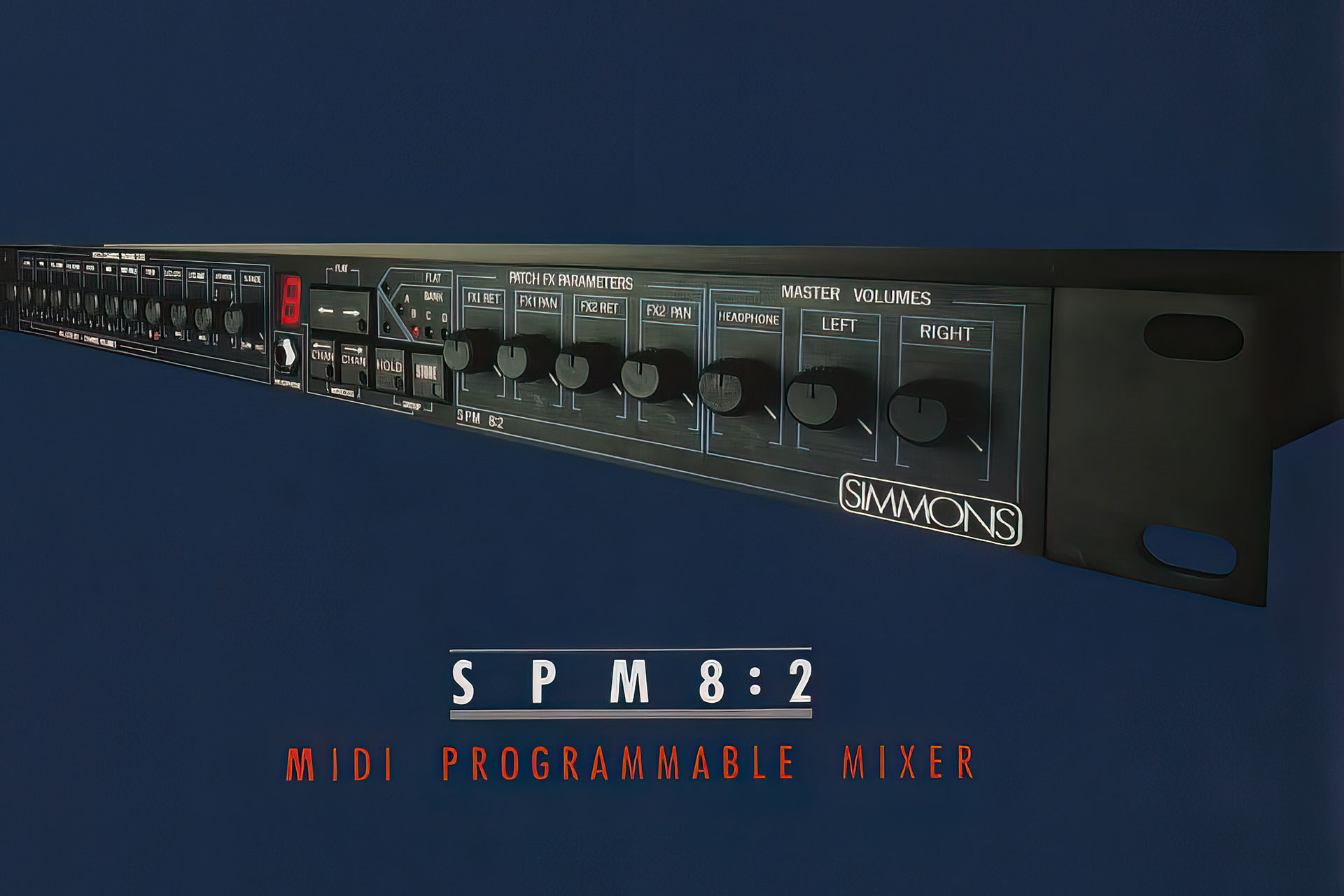
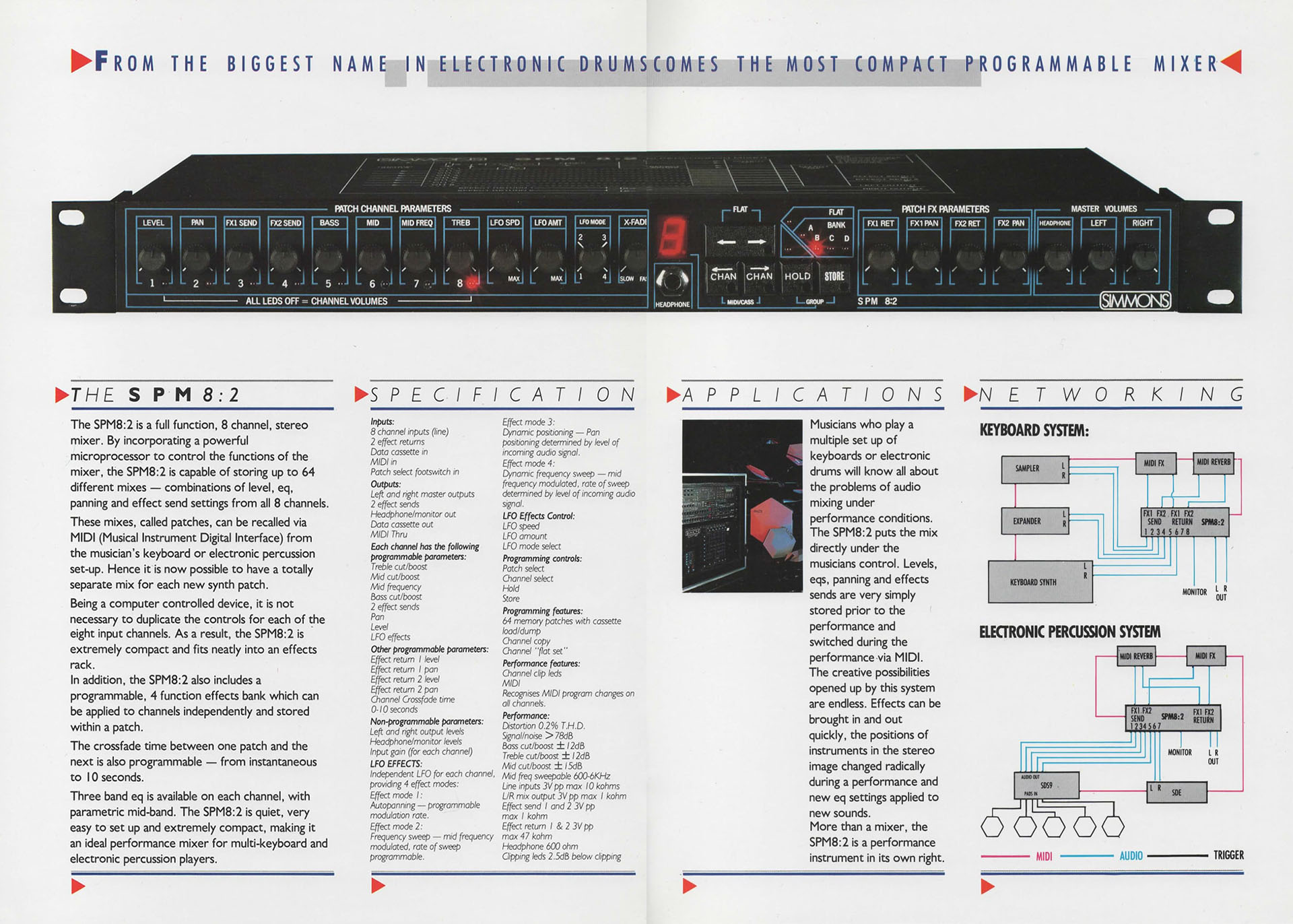
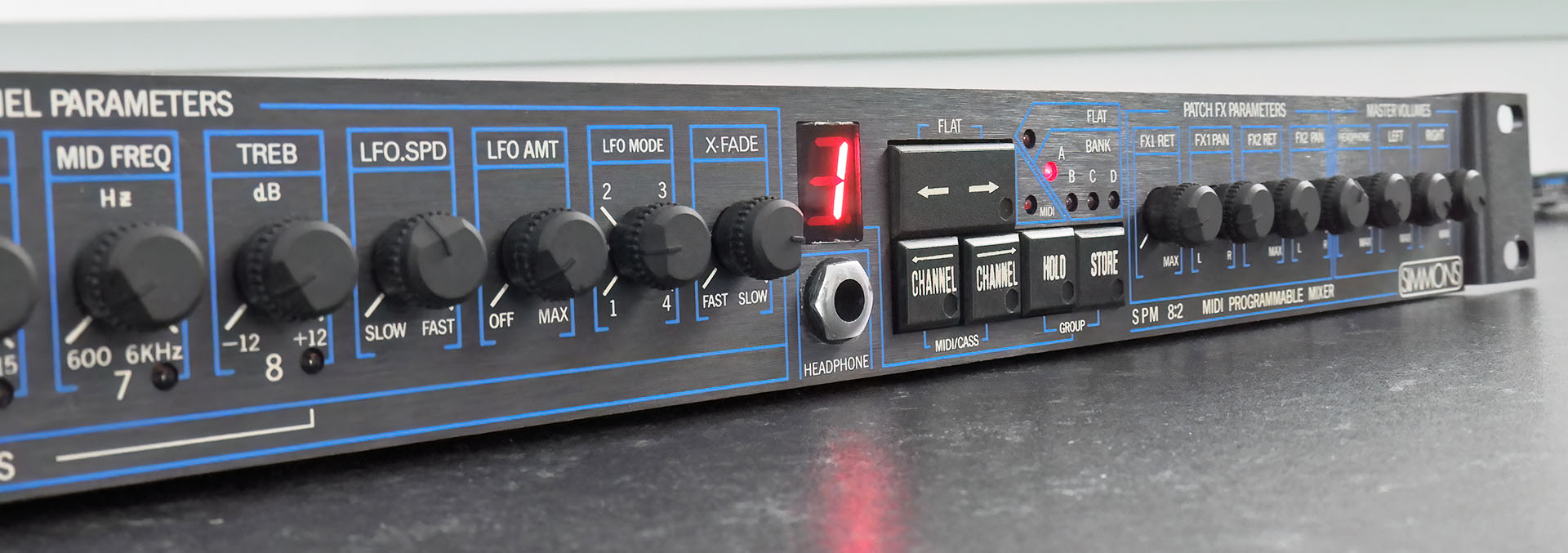
Back in 1987, one of the revolutionary products that Simmons released was the SPM8:2 digitally controlled analogue mixer.
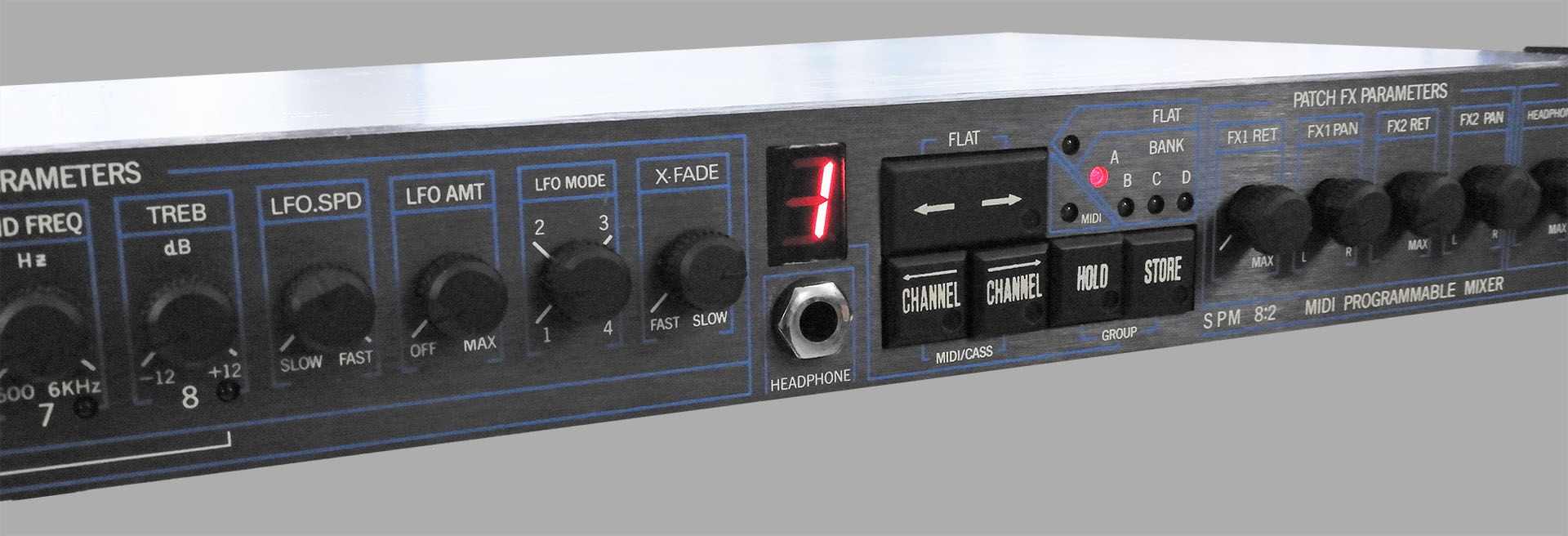
The world simply hadn't seen anything like this before. Suddenly, keyboard players, e-drummers and even studio engineers, could knock up a mix of eight signals, with effects, store that mix in a patch and recall several patches during a single performance or recording session.
Crammed into 1U, things were tight and indeed apart from heat, the SPM8:2, was criticised for its poor noise levels. There was and still is, talk about replacing the TL084s with more modern devices like the OP471. Geesh, people even said that TL072s would deliver an improvement. The use of transconductance amplifiers (OTAs) to control analogue signals helped a lot. Being current-based, there was very little cross-talk from control voltages to audio, inside the control ICs.
The truth however, is that the noise results from the close proximity of the digital electronics to the analogue electronics. The fact that the characteristic of the noise is not your classic and constant shhhhhhh but a type of chatter, confirms that. Shorting all inputs and muting all channels doesn't alter things too much so again, it seems that noise is being generated internally.
Okay, so let's have look...
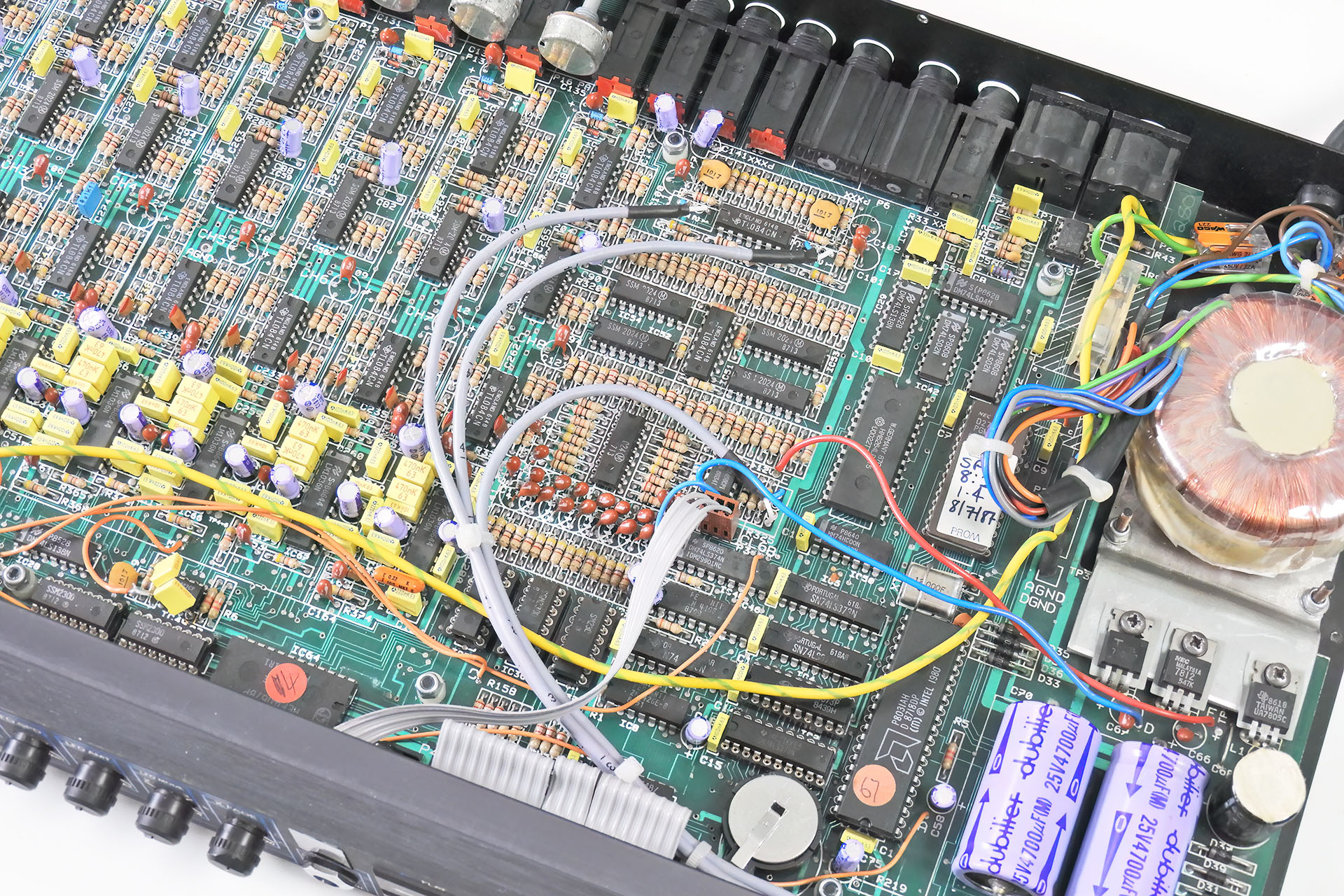
Anyone familiar with the insides of the SPM8:2 will notice three black cables coming from the front right to the middle right of the PCB. These cables carry analogue audio to and from, the volume and headphone potentiometers on the front panel and go straight over all the digital stuff. They also pass very close to the power supply.
Hmm... not good.
By the late eighties, Simmons was using a new type of cable for drum trigger assemblies. The new cable utilised a conductive polymer shield which provided a cost-effective and flexible solution. Well, they also used this cable for those signal-carrying lines in the SPM8:2, which mightn't not have been the best idea.
A few weeks ago, I pulled an old SPM8:2 out of storage. The thing hadn't been used for years so I thought I'd give it the once-over and see what I could do about that noise.
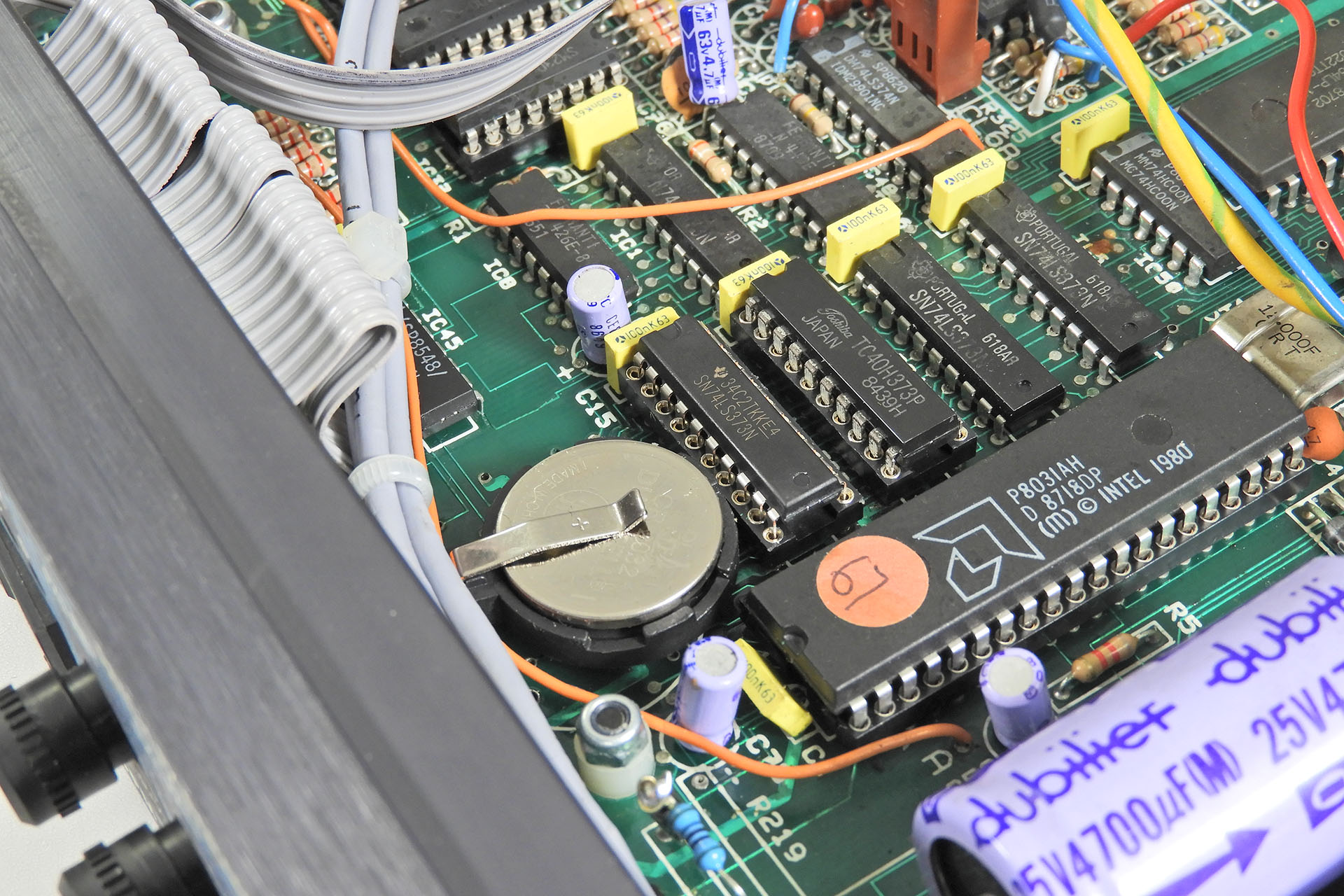
First things first. The Ni-Cd battery had just started leaking so it was quite fortuitous that I decided to do this when I did. I modified the circuit to take a lithium CR2032 and changed a couple of 74LS373 flip-flops that had suffered a little battery acid damage and weren't driving the 7-segment display and LEDs properly.
NOTE: I said "I MODIFIED the circuit". did NOT say "I just dropped in another type of battery". Go figure!
CAUTION: Please don't think you can swap out one type of battery for another. YOU CAN'T!!!!! It's a bit more involved than that.
Unfortunately but kind of as predicted, my battery leakage problems didn't stop at those two 74LS373s. Once powered up and with a fully working display and LEDs, flicking through channels and parameters, I couldn't find anything wrong but... I did notice some 'fur' around IC45 which is a 74LS175 (another flip-flop) and at least one broken track. IC46 multiplexes signals off the front panel pots. IC45 then feeds them onto a single buss.
Battery leakage is a killer. Luckily, this Simmons SPM8:2 didn't suffer too much as it was taken out of storage just in time.
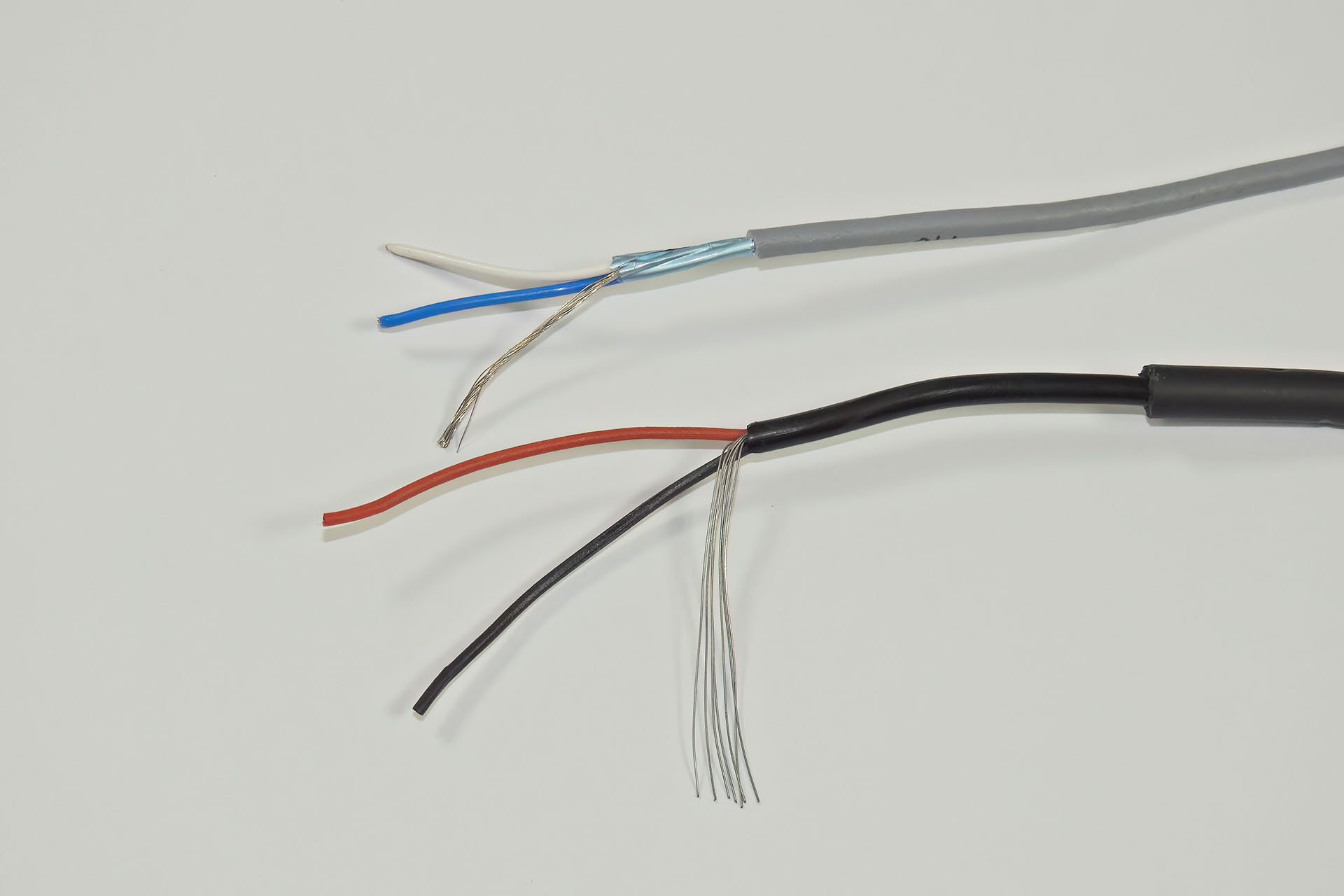
Okay, so in short, my Simmons SPM8:2 noise reduction mod entails replacing the original conductive polymer flying leads with fully shielded multi-core lines. The cables have a 100% metal foil shielding and in my humble opinion, would provide much better noise immunity than the stuff that Simmons used back in 1987.
My replacement metal foil shielded wires on top and the original conductive polymer shielded wires on the bottom.
Well, the results were quite startling as the replacement cables did indeed reduce the effect of all that digital chatter. My Simmons SPM8:2 noise reduction mod might inspire me to look into this a little further.
And here's what the mod looks like. It's really simple. You just need to take things easy.
The power supply in the Simmons SPM8:2 delivers +/-12V for the analogue. While quite adequate for connection of keyboards and of course electronic drums, the mixer can only operate at -10dBm. One option I'm looking into, is modifying things so that the SPM8:2 can operate at +/-15V. Right now, I'm not at all sure if that's possible but if it is, then doing so, may increase the signal-to-noise ratio, as well as making the outputs compatible with more modern destination devices running at +4dBm.
I think I'm also going to look at the earth on this box as apart from noise, the level of 100Hz (don't forget I'm in the UK so our mains is 50Hz), is more than I think it should be.
The nature of the noise, makes setting up a single-ended noise suppression solution across the outputs, somewhat challenging. With a little patience and careful configuration of the expander and gate sections however, it can be done. When material is playing through the system at normal levels, the noise is inaudible. It's just when things go quite, that you kind of think you can hear all those chips talking to each other!
I didn't expect my Simmons SPM8:2 noise reduction mod to work miracles but I have to admit to be being somewhat impressed with my modest efforts. I think with a little more work, this old Simmons MIDI programable mixer, might actually get some use. 🙂
The eighties was an exciting time for musicians and producers but the explosion of gear ironically left a few holes. In 1987, Simmons intended to fill one of those holes with the SPM 8:2 which ended up being used probably more by keyboard players than e-drummers. I myself had three or four of them, specifically as sub-mixers.
At 599 GBP it wasn't cheap but you have to remember of course, that it wasn't just an 8-channel mixer, it was programmable and that was a very welcome feature at the time. Why? Well ironically, one reason was that you could mute the sound sources that you weren't using in a particular performance and thereby... keep the noise level down! ?
Ushering in a new era which would soon become dominated by machines with controls that did several functions and even requiring users to press a combination of buttons to do perhaps, deeper tasks, the SPM8:2 was amongst the first to lose the ergonomics of the analogue box. Having said that, we seemed to be happy with the sacrifice of old ergonomics and musicians, engineers and producers quickly accepted the fact that now, they would have to 'learn' stuff!
This Simmons SDS7 battery leak occurred because the battery wasn’t charged regularly.
Recently in, was a Simmons SDS7.This is my second most favourite electronic drum systems of all time, after the Simmons SDX. In fact, you can read how much I love this instrument here.
Anyway, this SDS7 was apparently just fine a couple of years ago but when the owner recently got it out of storage, there was no sound. Powering up but otherwise completely dead, only the voice-card name illumination seemed to be coming on with nothing showing in the programmer display. Well, I had a pretty good idea what was wrong with it.
Like a lot of music technology at the time, the pre-MIDI Simmons SDS7 used NiCd (nickel-cadmium) batteries to back up its memory. Some manufacturers like Cheetah, continued to use NiCads all the way up to the end of the eighties, perhaps even a little later. Unlike lithium batteries which soon took over, NiCads need to be regularly charged. If left uncharged for an extended period, NiCd batteries die and WILL LEAK.
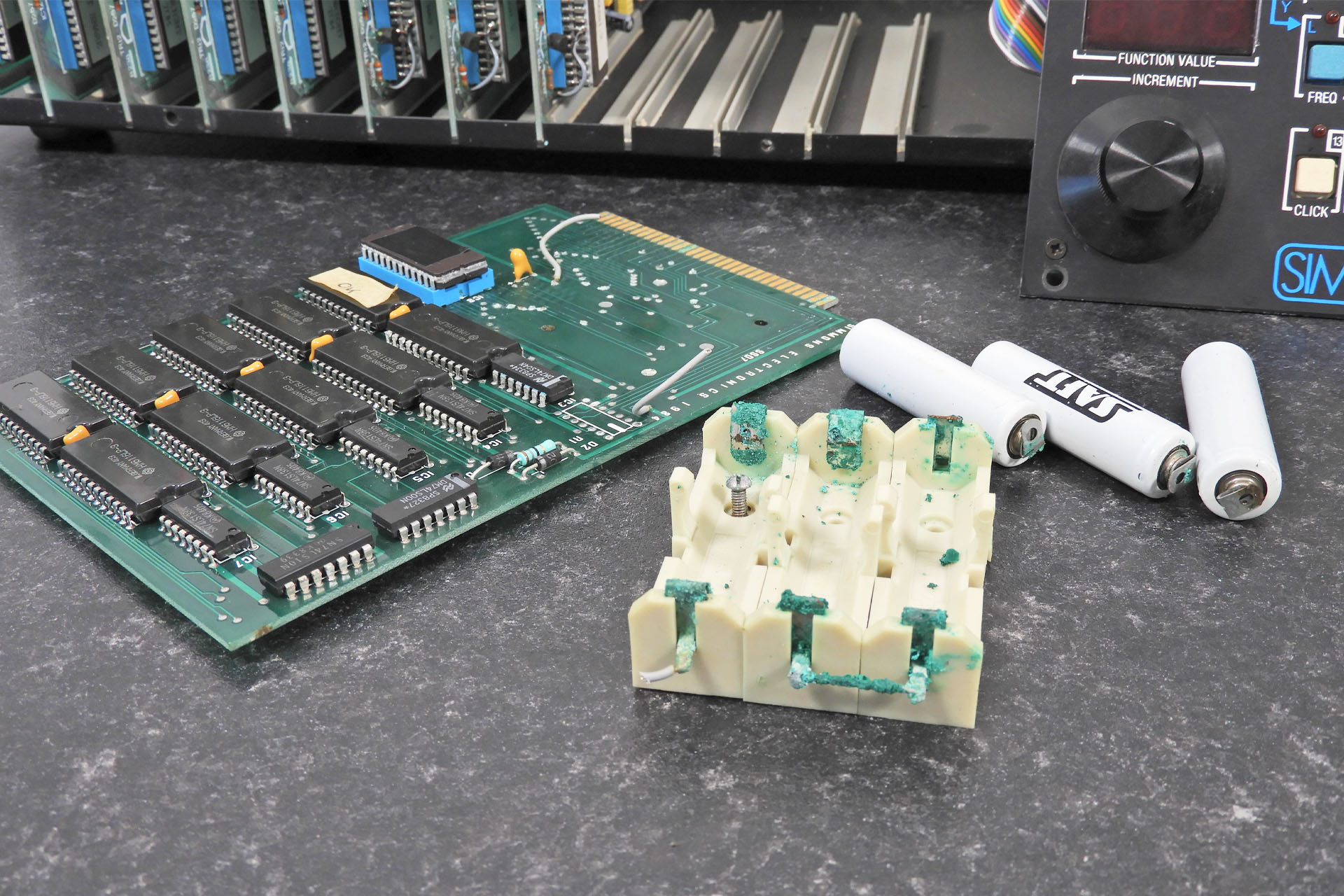
Fortunately, the Simmons SDS7 was built with vertically mounted PCBs. Despite the fact however, that there was also a version (like this one) which, instead of having a single battery soldered directly to the memory-board, used a triple AA battery holder (3 x 1.2V in series = 3.6V), battery acid managed to leak out over those already old solder joints, tracks and components. I soon noticed for example, that the C̅E̅ line was down and in fact there were several other issues preventing code from running and therefore not allowing the machine to boot.
There was also, a fair bit of damage to tracks on the rear buss-board (marked up as 'SDS7 BACK PLANE'), which couldn't be resolved by cleaning alone and which required some hot-wiring. Annoying but to be expected.
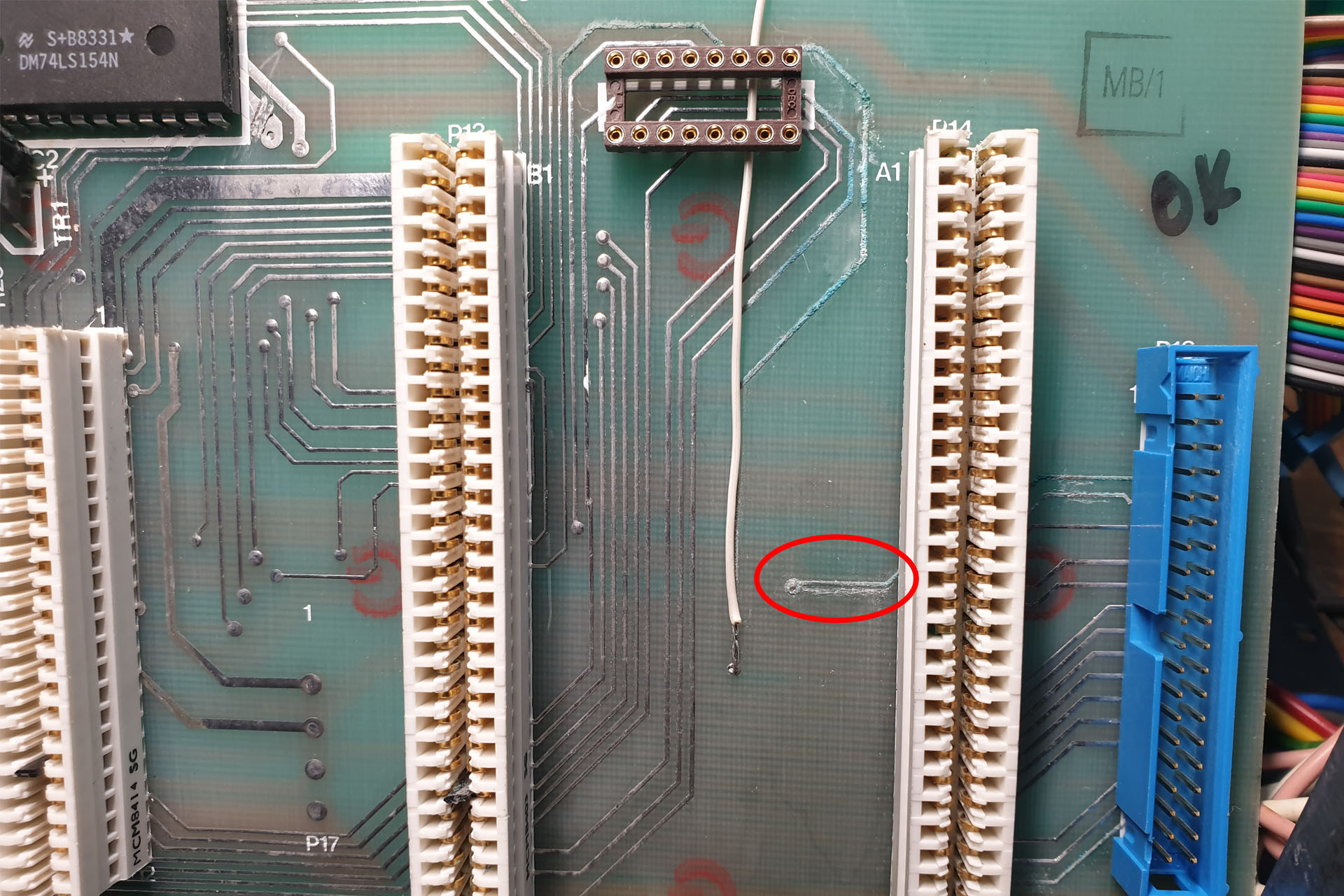
Although the memory-board was okay, some tracks were badly damaged on the rear buss PCB. The one highlighted in red had completely perished and only the white trace was left.
Above you can see that I'd already jumped one track but there were another eight which although buzzed out okay, I really didn't like the look of. One in particular looked as though it had completely succumbed to battery acid.
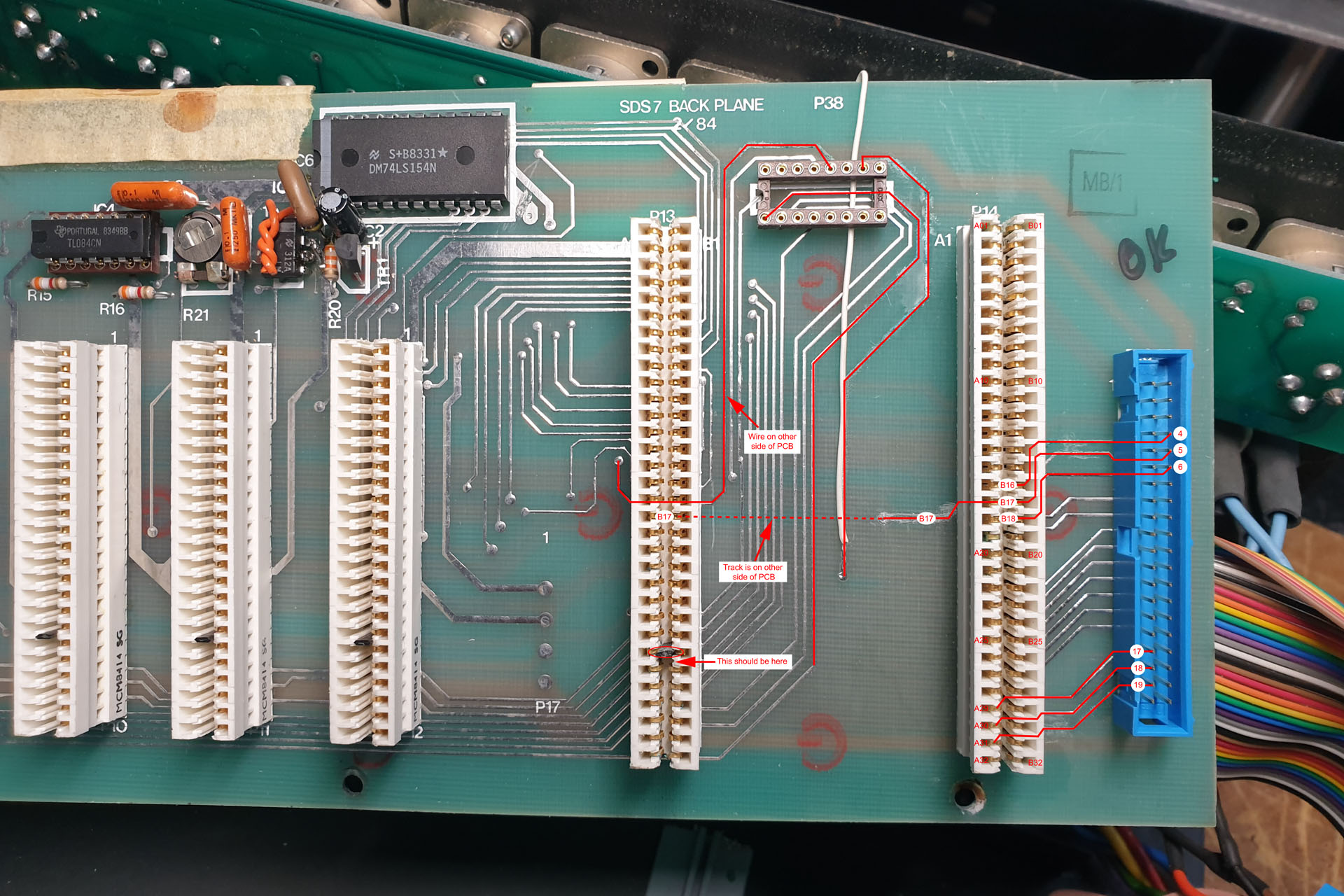
Technical literature on really old machines like the SDS7 is thin on the ground. Techs often have to make do with copies that were scanned many years ago on what would now be classed as, low-resolution scanners. I therefore, decided to make myself a little reference diagram.
Unlike the image above which is a standard 1920 x 1280, the original pdf document is pretty big but without going to that kind of trouble, I'd be shooting in the dark. In the end, I actually decided to install my wires around the back of the back plane PCB.
You'll notice in the two images above, that the polarising key in the CPU card edge connector (P13) is somewhere where it shouldn't be and that the key in the edge connector to the right (that takes the memory-board) is missing altogether. In fact, there was a polarising key on one of the voice-cards that was also out of place and so the card didn't work properly.
Anyway, while I was buzzing things out on the back plane, I carried on cleaned up the memory-board.
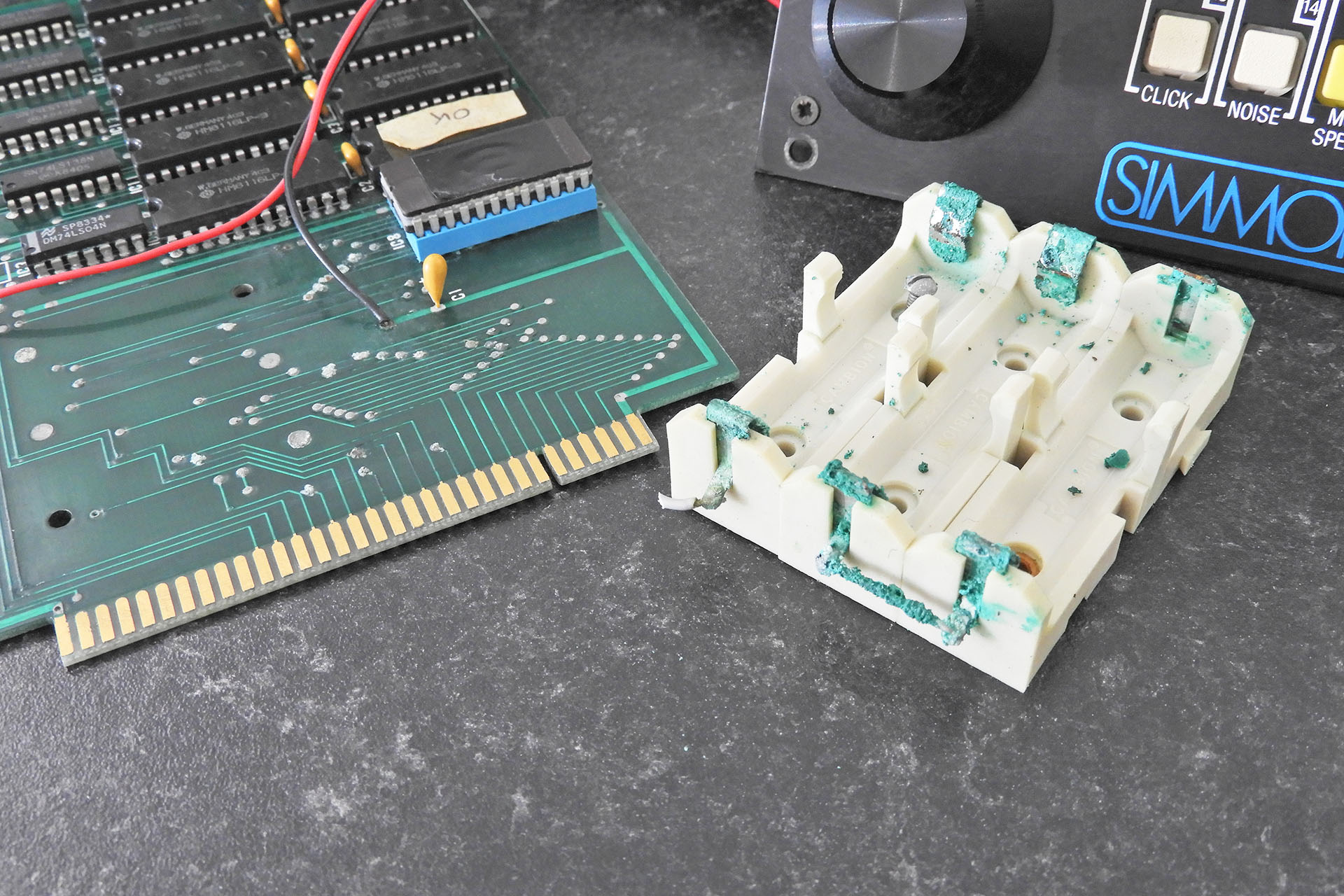
The battery holder can't be salvaged but I have other plans anyway. I've made a start on cleaning up the memory-board. You may notice that I changed the two grey battery wires. They are now colour-coded!
When I say "cleaning up the memory-board", it actually took several days to buzz out connections and hot-wire tracks that had been damaged by battery acid. After all that, this SDS7 finally managed to consistently boot but there was another problem; the data encoder was unresponsive. Grr... The problem turned out to be a simple but very annoying, dry joint under a buffer that reads the signal off one of the optical receivers. Phew...
My own SDS7 is serial number 71722. The serial number on the back of this one was #70320. If sequential, that's 1,402 units difference. More than just a batch or two!
Indeed, as I went over the insides of this SDS7, it became apparent that it was quite an early version. It had the optical encoder as opposed to the electrical contact type. The polarising keys in the edge connectors on the back plane were the small bits of black plastic type, instead of the yellow clip types used later. There were also various wire jumpers on the CPU-board that aren't on later revisions.
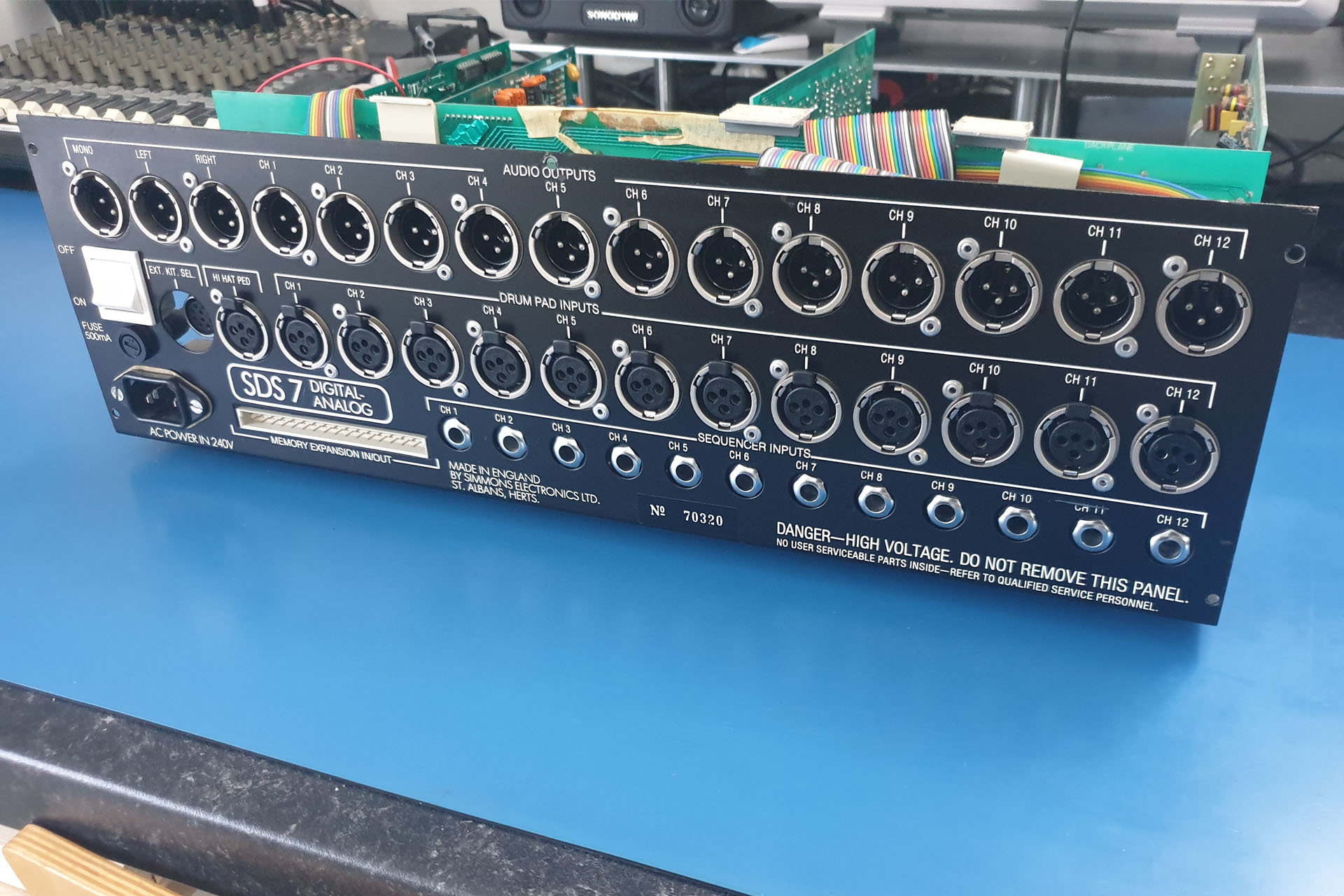
On a side note... There was also some work to do around the back of the unit as the socket pins although not corroded (because they can't), were very black and so needed a good clean.
The XLR pins on the audio outputs were black so needed a good clean. I think I'm also going to have to do the XLR receptacles on the pad inputs.
The lid was smacked in at the front and was also badly scratched and lots of areas that showed corrosion.
Removing the creases on a piece of metal like this is a time consuming task but it'll be worth it. This SDS7 is otherwise in pretty good cosmetic condition.
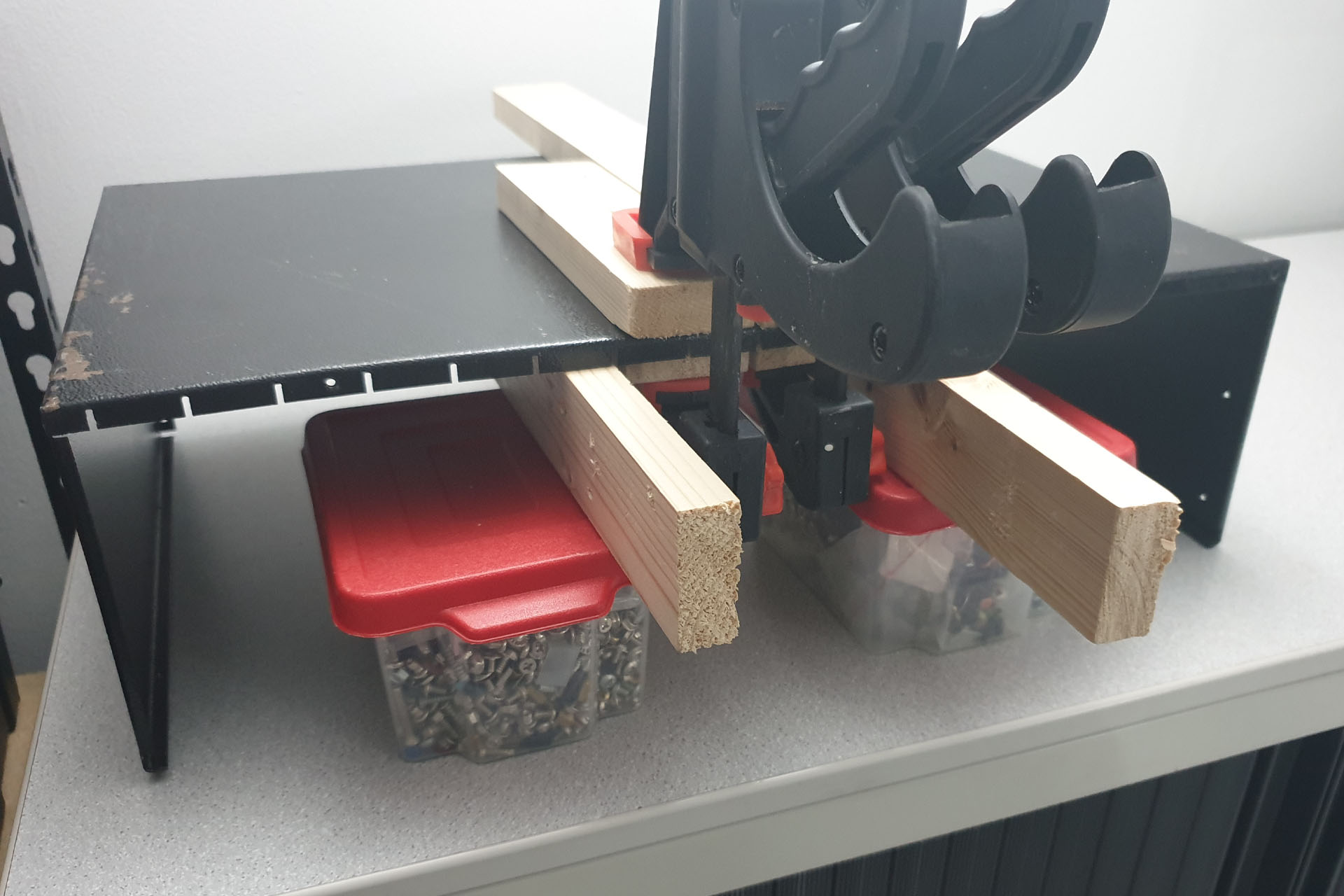
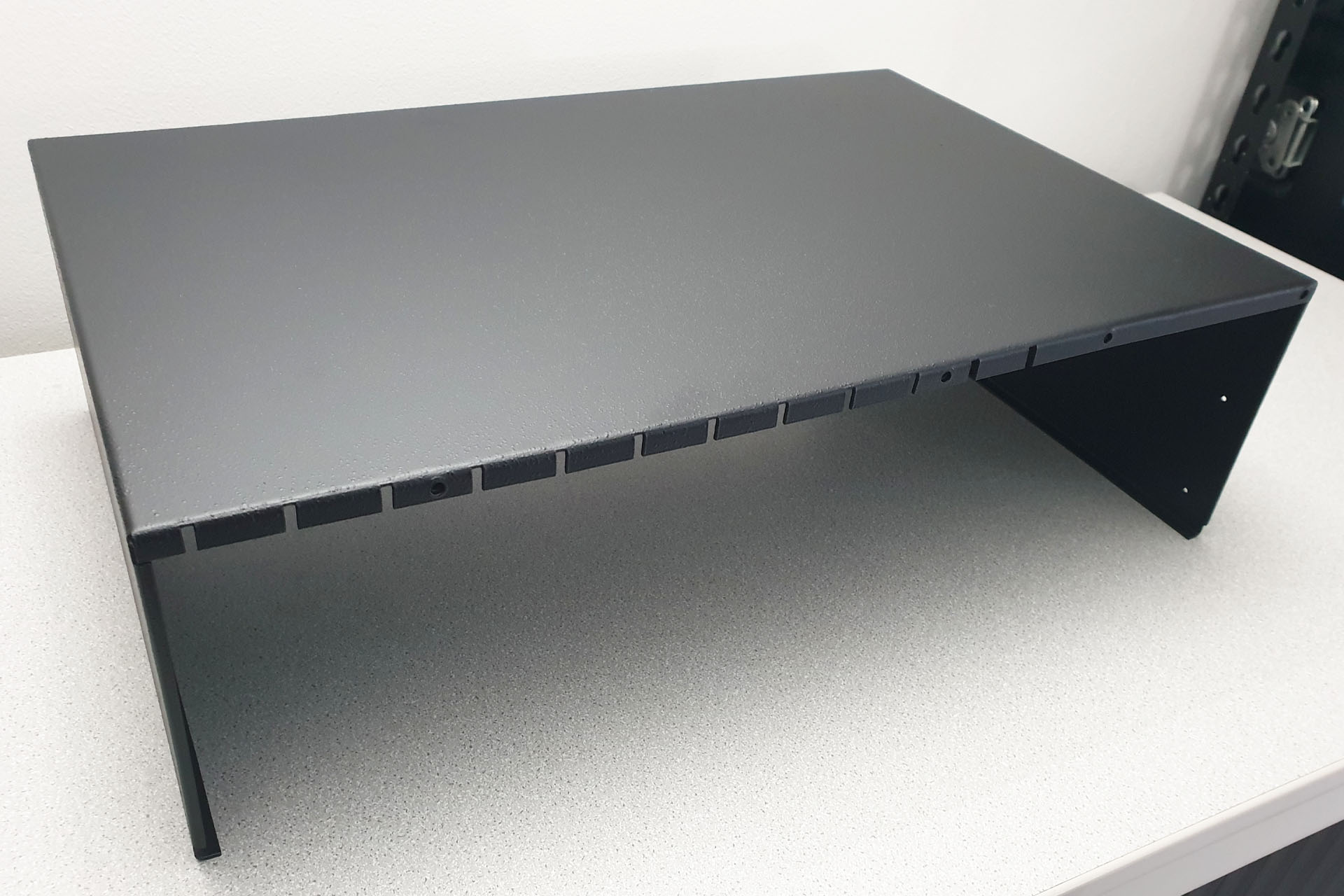
After several days (or perhaps two weeks) of patient straightening with a combination of heat, G-clamps and weights, I took it to a local company to be sand blasted and powder coated. They said that they didn't think they'd be able to match up the leatherette finish but when I collected the lid a week later, I was blown away. This top case looks like it just came from the factory! WOW!!!! 😮
I was absolutely delighted with the results of sand blasting and powder coating this old Simmons SDS7 top case. It wasn't just the colour. They got the shade and texture bang on. THANK YOU Chiltern Blast Cleaning!
So, back to batteries... Amongst instruments like the afore mentioned Cheetah MS6 and true vintage gems like the Sequential Circuits Prophet V, a Simmons SDS7 battery leak is something I've seen quite a few times over the years, or should I say decades. Don't think that everything can be fixed. It took me two years to concede that the last Prophet V I had in with a leaked battery wasn't salvageable. It's incredibly sad and something that would potentially 'brick' an iconic piece of vintage music tech' so please take note: If you have a piece of old gear like this, do check what kind of battery it has. If it's got a NiCd battery, then make sure it's charged regularly.
! ! ! WARNING ! ! !
Floating around on the Internet, is a post of someone who's substituted a NiCd battery with a lithium battery in (coincidentally), a SDS7. PLEASE DO NOT DO THIS!
Memory retention is designed for specific batteries. The chemistry of a lithium battery is very different to that of a NiCd battery. For a start, the former can't be charged and if you try to do so, you may end up with getting more than your fingers burnt... literally.
For over thirty-five years now, equipment has been designed to take batteries like the CR2032 which we're all familiar with and which outputs 3.0V. Older NiCd batteries are rated at 3.6V. That 16.7% difference can sometimes be significant.
You should also double check when buying batteries as many unscrupulous or perhaps just ignorant retailers advertise NiMH (nickel metal hydride) as NiCd and lithium-ion as lithium. In all fairness, sometimes it's just not clear. As we all know, a Google search for example, will often throw up results that are close to your search term so please check before you buy. Yes, I know it's frustrating, especially when NiCd batteries are becoming increasingly more difficult to procure but please don't be tempted to take the easy option. Batteries are all different. Even those that can be charged, have different charge rates, depending on their respective chemistry. Charging circuits for NiMH batteries for example, are usually designed to measure the status of the battery, thereby dynamically reducing the current that's being fed into them. This is NOT the case with NiCd charging circuits. If you substitute NiMH into a system that normally takes NiCd, then you stand the risk of overcharging the battery. This might not be disastrous but will reduce the lifespan of the battery.
MY APOLOGIES TO SELLERS
If you're considering buying a Simmons SDS7, please do also consider asking the seller to show you a picture of the memory-board. My apologies in advance to anyone selling a Simmons SDS7.
AND FINALLY...
It's quite difficult to find information on the Simmons SDS7 and so I thought it prudent to offer some useful links for those interested.
For a start, if you're in the US, you need The Simmons Guy on your side. Ed is not just knowledgeable and experienced, he's methodical, tidy and VERY helpful. Just one thing; because of all that, he's amazingly busy!
Ed (The Simmons Guy) is also very active on social media and it's worth checking out his Facebook page and his YouTube channel. In fact, in amongst his videos, you'll see my own SDS7 #71722 before I bought it from him, LOL. Ed, where on earth do you get the time?
This site has a lot of really useful SDS7 information and may be of help to those who just need a few facts.
And of course, there's the Simmons Virtual Museum which also has a few useful resources.
UPDATE - 30th May 2024
Since writing this article, I'm delighted to advise that the SDS7 featured above, is now fully up and running! 😀
It took a while and as I focused my attention on the memory-board, actually there were a couple of tracks on the back plane that slipped my eye. Grr...
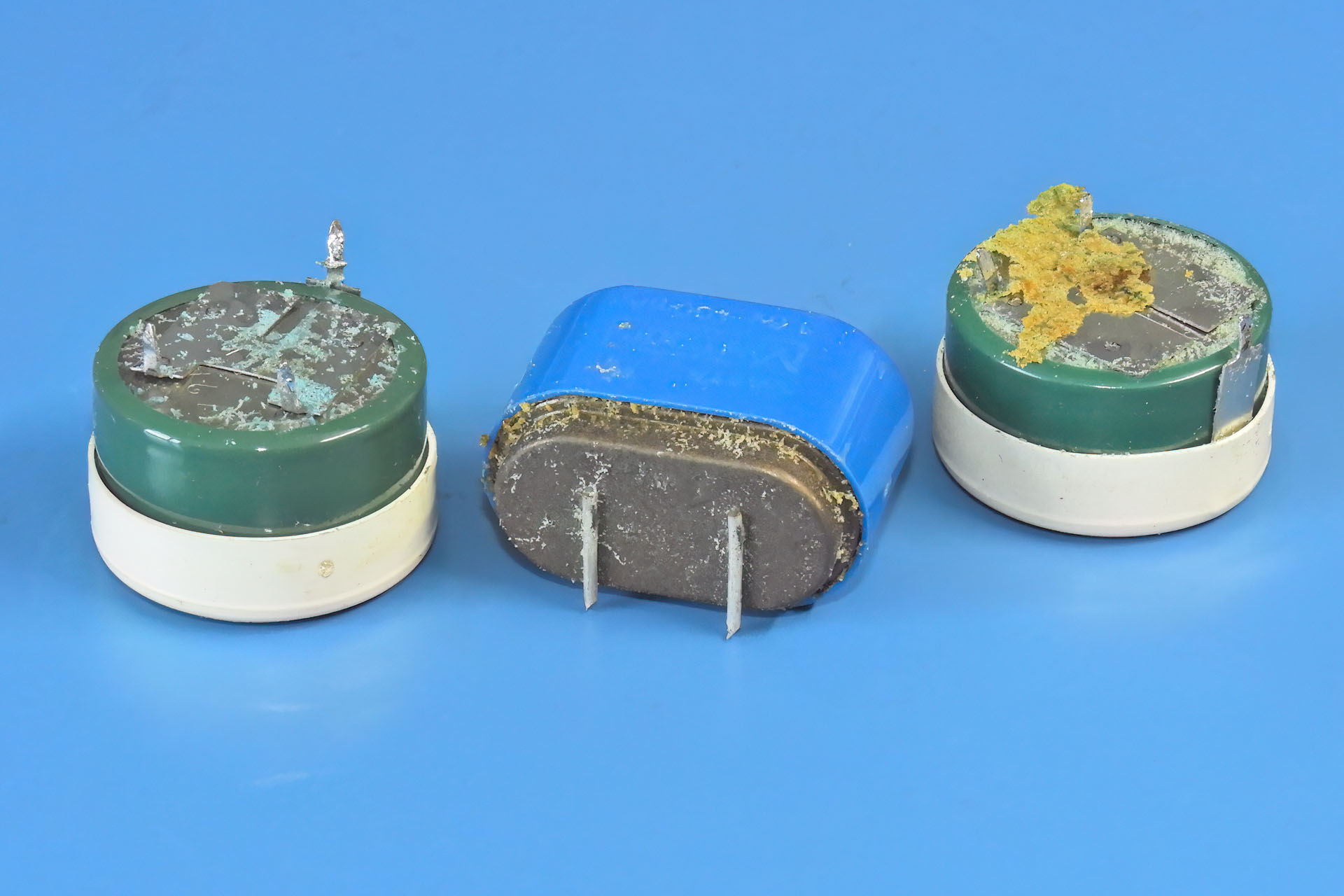
Since posting however, I've had a few more older items in with completely leaked out batteries.
If you think they look bad, then you wouldn't want to see the insides of the machines that these all came out of! One of them had to be scrapped as it was totally unsalvageable.